One per cent of revenue is now the price of a licence
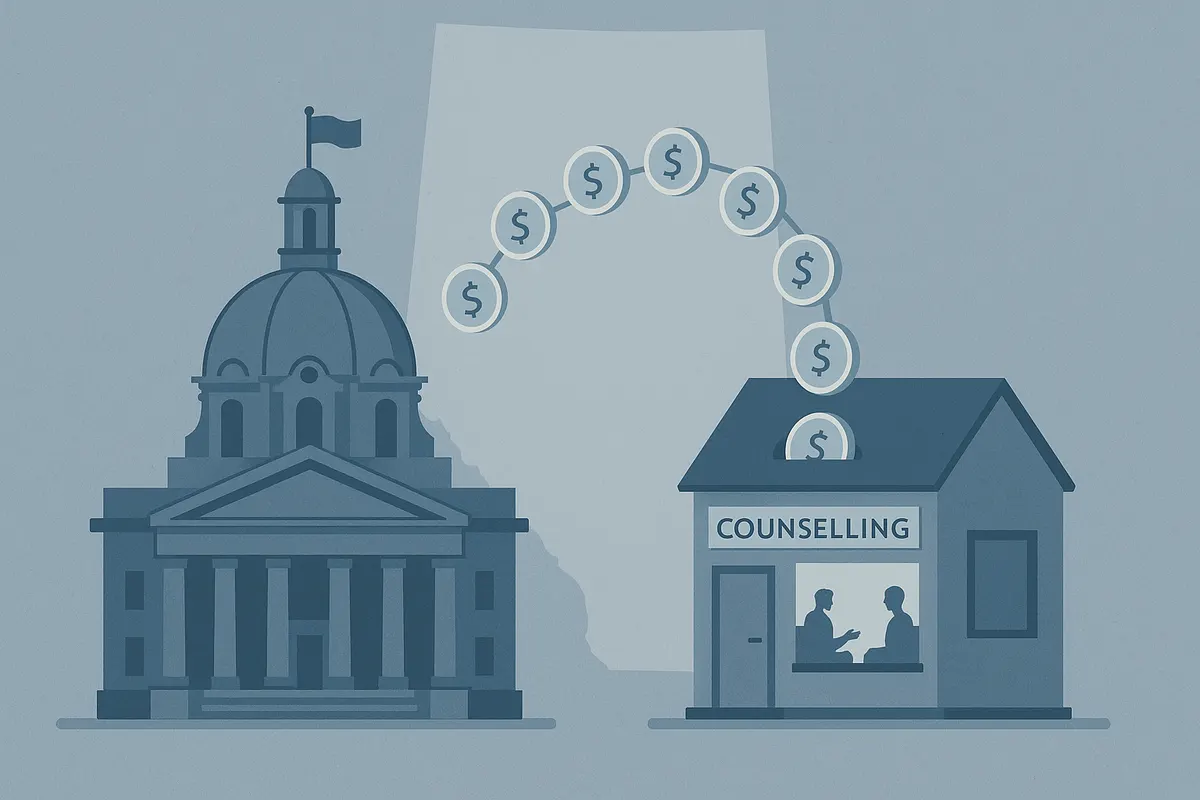
Alberta’s online gambling market opened on July 13. Within months, the province wrote a CA$2.4 million cheque (about US$1.7 million) to Brick House Recovery Centre to expand outpatient gambling treatment, and the interesting part is not the number. It’s who pays. Under Alberta’s iGaming framework, 1% of gross gaming revenue is directed to social responsibility programs covering education, research and treatment. Operators fund the harm their product creates. Taxpayers don’t.
That structure is now close to standard in newly regulated markets, and it exists for a blunt political reason. No legislature wants to be the one that legalised online casinos and then told a family on the evening news that the counselling waitlist is nine months long. Responsible gambling funding is the answer to that question, written into the licensing conditions before the first bet is placed.
Service Alberta Minister Dale Nally put the logic plainly when the regime was taking shape: Albertans were already gambling, the province was building a regulated market that put player safety first, and “the operator will pay for it. That’s the right thing to do.”
Why iGaming regulation ties licences to harm funding
Strip away the press-release language and there are four hard-headed reasons regulators attach a harm-funding obligation to market entry.
- Political legitimacy. Legalisation debates are won or lost on the harm question. A ring-fenced funding stream lets a government point to something concrete rather than a promise.
- Cost internalisation. Gambling disorder generates costs that land on health systems, courts, employers and families. A percentage-of-revenue levy pushes some of that cost back onto the businesses generating it, the same principle used in environmental and tobacco policy.
- Budget insulation. Funding tied to gross gaming revenue scales with market activity and doesn’t have to compete in the annual health budget. When revenue grows, so does the treatment pot.
- Enforceability. A levy is auditable. Unlike vague commitments to “promote safer play”, a percentage of declared revenue can be checked against operator filings and enforced through licence conditions.
Worth noting what a levy is not. It doesn’t change the mathematics of the games themselves. Every product in a licensed casino carries a house edge, and 1% of gross gaming revenue is 1% of what players have already lost. The funding model treats gambling as a legal activity with a predictable rate of harm, then pays to mitigate it. That’s harm minimisation, not harm elimination, and regulators who pretend otherwise get found out.
Inside Alberta’s CA$2.4M grant to Brick House Recovery
Alberta’s model is worth studying because the money moved fast and the route it took is transparent.
The province ran an open competition for organisations able to deliver coordinated outpatient and online gambling treatment and recovery services. Brick House Recovery Centre was the first successful applicant, with additional recipients due to be selected later in the year. The CA$2.4 million funds a publicly funded, person-centred outpatient program: four weeks of treatment followed by up to eight weeks of individualised aftercare, delivered in person in Edmonton and Calgary and virtually across the province.
Three design choices stand out. First, it is publicly funded at the point of use, so the person seeking help isn’t paying. Second, it is outpatient rather than residential, which is the appropriate intensity for most gambling disorder presentations and keeps cost per client low enough to serve real volume. Third, the aftercare tail matters more than the four-week core. Relapse in gambling disorder typically happens after formal treatment ends, and programs that stop at discharge tend to lose people.
The flow of money is straightforward: licensed operators report gross gaming revenue, 1% is directed to social responsibility programs, and the province distributes grants through competitive processes to providers. At launch, the Alberta iGaming Corporation reported 33 licensed sites accepting wagers. More operators and more revenue mean a larger pool, which is the point of a percentage-based levy rather than a flat fee.
Rick Wilson, Minister of Mental Health and Addiction, framed the goal as recovery-focused support that helps people “restore stability, build resilience and achieve long-term recovery.” Fair enough as an aim. Whether the program hits it is a measurement question, and I’ll come back to that.
Player protection requirements across jurisdictions
There is no single template. Mature and emerging markets have landed on different mechanisms, and the mechanism shapes how stable and how large the funding actually is.
| Jurisdiction | Funding mechanism | Who distributes it | Practical effect |
|---|---|---|---|
| Alberta | 1% of gross gaming revenue from licensed iGaming operators | Provincial government, via open competitions for providers | Scales with market size; grants awarded to named treatment providers |
| Ontario | Share of gaming revenue paid to iGaming Ontario, plus binding responsible gambling standards in the AGCO Registrar’s Standards | Province, through health services and established RG bodies | Treatment funded within the wider health system rather than by a single earmarked percentage |
| United Kingdom | Statutory levy on licensees as a share of gross gambling yield, replacing a voluntary donation system | Collected under the Gambling Commission framework, split across research, prevention and treatment | Removes operator discretion over how much to give and to whom; online sectors sit in a higher band than land-based |
| US states | Varies widely: a slice of gaming tax revenue, a flat annual payment per licensee, or per-device allocations | State problem gambling councils, health departments, dedicated statutory funds | Very uneven per-capita funding; some states run large programs, others little beyond a helpline |
Exact levy rates and dollar allocations are set in regulation and revised periodically, so anyone relying on them for compliance work should check the current instrument rather than a news summary. For primary sources, the UK Gambling Commission publishes levy guidance for licensees, and the National Council on Problem Gambling tracks state-level funding in the US.
The structural lesson is that voluntary systems underperform. The UK spent years relying on operators choosing to donate, which produced inconsistent totals and a permanent argument about whether industry money compromised the independence of the organisations receiving it. A statutory levy is a duller instrument, and better for it.
What problem gambling support actually buys
“Treatment funding” is a category, not a service. In practice, the money in Alberta and comparable markets goes to five distinct things, and they are not equally well evidenced.
- Clinical treatment. Structured outpatient programs like Brick House’s four-week course plus aftercare, typically built on cognitive behavioural therapy and motivational interviewing, which have the strongest research base for gambling disorder.
- Helplines and triage. Round-the-clock phone, chat and text services that assess callers and route them to local providers. In Ontario, ConnexOntario performs this role; across the US, 1-800-GAMBLER is the common front door.
- Family and financial support. Counselling for partners and parents, plus debt advice, because the presenting crisis is usually money rather than the gambling itself.
- Prevention and education. Public campaigns, school and workplace programs, and training for GPs and debt advisers so they recognise gambling problems they currently miss.
- Research and prevalence surveys. The unglamorous line item that tells a regulator whether anything is working. Alberta explicitly includes research alongside education and treatment in its 1% allocation.
Add self-exclusion infrastructure to the list. Deposit and loss limits, cool-off periods and reality checks sit on the operator side of the ledger as compliance measures rather than grant-funded services, but they only work when a player knows they exist. Our responsible gambling guide walks through the tools available and how to use them.
Does responsible gambling funding reduce harm? The honest answer
Partly, for the people who reach the services, and nobody can yet tell you how much harm is prevented across a whole population.
What the evidence supports reasonably well: gambling disorder responds to treatment. Cognitive behavioural therapy and brief motivational interventions produce meaningful reductions in gambling behaviour and related distress in controlled studies, and self-exclusion tools reduce activity among those who use them. Funding services that deliver these interventions is defensible on the evidence.
What the evidence does not support is any claim that a levy solves the problem. Three limitations deserve to be stated out loud.
Reach is the binding constraint. Across surveyed populations, only a small minority of people experiencing gambling problems ever seek formal help; studies routinely put treatment-seeking in the single-digit percentages. A world-class program that serves 3% of an affected population changes very little in aggregate. Alberta’s decision to fund virtual services province-wide is a sensible attack on that problem, because geography and stigma are two of the biggest barriers.
Attribution is hard. Prevalence estimates in most jurisdictions hover around 1% of adults for problem gambling, with several times that share showing some level of risk. Those figures move slowly and respond to advertising volume, product design, economic conditions and survey methodology as much as to treatment capacity. Attributing a shift to a grant program is close to impossible without long-run, consistently measured data.
Outputs get reported instead of outcomes. Annual reports love helpline call volumes, campaign impressions and clients enrolled. Those are activity metrics. The numbers that matter are completion rates, abstinence or controlled-play rates at 6 and 12 months, and reduction in financial and family harm. Programs that publish those are rare, and markets launching now have an opportunity to make publication a condition of the grant rather than an afterthought.
Alberta’s competitive grant process, with further recipients to be named, at least creates the possibility of comparison between providers. If the province publishes outcome data alongside spending, the 1% model becomes something other regulators can copy with confidence. If it publishes only dollar totals, it becomes a line in a budget and an easy talking point.
Questions people keep asking
Why do new iGaming markets fund treatment programs?
Because harm funding buys political consent for legalisation and pushes the social cost of gambling back onto the operators profiting from it. A percentage-of-revenue levy written into licensing conditions is auditable, scales with the market, and doesn’t depend on annual budget negotiations.
How much do operators contribute to gambling addiction services?
It depends entirely on the jurisdiction. Alberta directs 1% of gross gaming revenue to social responsibility programs. The UK applies a statutory levy set as a share of gross gambling yield, with online operators in a higher band than land-based venues. Several US states use flat annual payments per licensee or a slice of gaming tax instead, which produces far less consistent per-capita funding.
What are player protection requirements?
Typically a bundle: identity and age verification, deposit and loss limits, self-exclusion, session reminders, advertising restrictions, staff training, plus the obligation to fund or contribute to treatment and research. They sit in the licence conditions, and breaching them risks penalties or licence loss.
Where can someone get help now?
In Alberta, provincially funded outpatient and virtual gambling treatment is available through funded providers including Brick House Recovery Centre. Elsewhere, national and state helplines such as ConnexOntario in Ontario and 1-800-GAMBLER in the US offer free, confidential triage. Gambling should be treated as paid entertainment with a built-in house edge, never as a way to make money, and if it has stopped being entertainment, the limits and self-exclusion tools in your account are the fastest first step.


Leave a Reply