The one-line version, and why it isn’t the whole story
A betting duty is a tax on the bookmaker’s gross profit, not on your bet. True, tidy, and almost useless as a description of what actually happens. The real gambling tax impact is that operators treat duty as a cost of goods sold, and costs of goods sold get priced in. The bookmaker signs the cheque to the treasury; the price of a bet moves to pay for it.
That is the thesis of this piece, and the current fight in Britain is a useful place to watch it play out in public. Nothing here is unique to the UK. The same arithmetic runs in India, Brazil or Ontario, only with different tax bases and different amounts of noise.
UK bookmakers battle a new tax proposal
Britain currently taxes remote gambling through a set of separate duties. Sports betting sits under General Betting Duty at 15% of the operator’s gross gambling yield, meaning stakes taken minus winnings paid out. Online casino and slots sit under Remote Gaming Duty at 21% of gross gaming revenue, a rate that was itself lifted from 15% in 2019. Pool betting and gaming machines have their own rates.
The live argument is about consolidating and raising those rates. Options that have been put on the table include merging the separate remote duties into one harmonised Remote Betting and Gaming Duty, and pushing the online rate well above where it sits today. Policy think tanks have published proposals that would raise billions of pounds a year in extra receipts; the higher-end versions would roughly double what online operators currently pay on gaming revenue.
Opposing it: the Betting and Gaming Council, which speaks for the large licensed operators, the listed bookmakers themselves, and, loudly, British horseracing. Their arguments are worth separating because they are not equally strong.
- Black market displacement. If licensed prices get worse, some customers move to unlicensed sites with no deposit limits, no affordability checks and no dispute process. This is the industry’s best argument and also the one it makes most self-servingly.
- Racing funding. British racing draws income from the horserace betting levy and from media rights tied to betting turnover. Less turnover, less money for the sport.
- Jobs and shop closures. Retail betting shops run on thin margins and are the first thing cut.
- Investor reaction. Gambling stocks move sharply on tax speculation, which the sector presents as evidence of fragility.
The counter-argument from the other side is straightforward: gambling generates social costs the state pays for, the sector is lightly taxed relative to its revenue, and warnings about the black market have been made before every tax rise and every tightening of rules.
What a betting duty actually taxes
Three questions decide how much a gambling tax hurts a player: what is being taxed, at what rate, and who is legally liable.
Who pays gambling taxes
In most regulated markets, the operator is liable. You do not file a return for a football bet in the UK. Point-of-consumption rules mean the duty follows the customer’s location, so a Malta-licensed sportsbook taking UK bets pays UK duty. India works differently in one important respect: tax touches the player directly as well as the platform, through GST on the amount you put in play and income tax on what you win.
Legal liability and economic burden are different things. Economists call this tax incidence. When demand is relatively insensitive to small price changes, as it tends to be with recreational betting, most of the burden shifts to the buyer.
Different tax models worldwide
The tax base matters more than the headline percentage. A 28% tax on turnover is a far heavier charge than a 28% tax on gross revenue, because turnover is a much bigger number.
| Model | What gets taxed | Example | What the player notices |
|---|---|---|---|
| Gross revenue (GGR) | Stakes minus winnings paid | UK: 15% General Betting Duty; 21% Remote Gaming Duty | Slightly wider margins, lower RTP settings |
| Turnover / stake | Every rupee wagered or deposited, win or lose | India: 28% GST on the full face value of deposits for online money gaming | Cost applied before a single round is played; punishes high-turnover, low-margin play hardest |
| Player winnings | The payout, in the player’s hands | India: 30% tax on net winnings from online games, deducted at source | Posted odds unchanged, take-home return lower |
| Fees and levies | Flat licence charges, revenue-share levies | UK horserace betting levy, regulator fees | Small, quietly baked into margin |
The arithmetic: how tax hikes reshape odds and payouts
Here is the part most coverage skips. Take a genuine 50/50 market, two selections, no edge. Fair odds are 2.00 on each side. A bookmaker running a 5% margin prices both sides at 1.90, because 1 ÷ 1.90 = 52.63% implied probability per side, 105.26% in total, which is a 5% hold on turnover.
Margin adjustments explained
On £100 of balanced turnover, that 5% margin produces £5 of gross gambling yield. At 15% duty, the operator hands over 75p and keeps £4.25 before marketing, staff, payments and everything else.
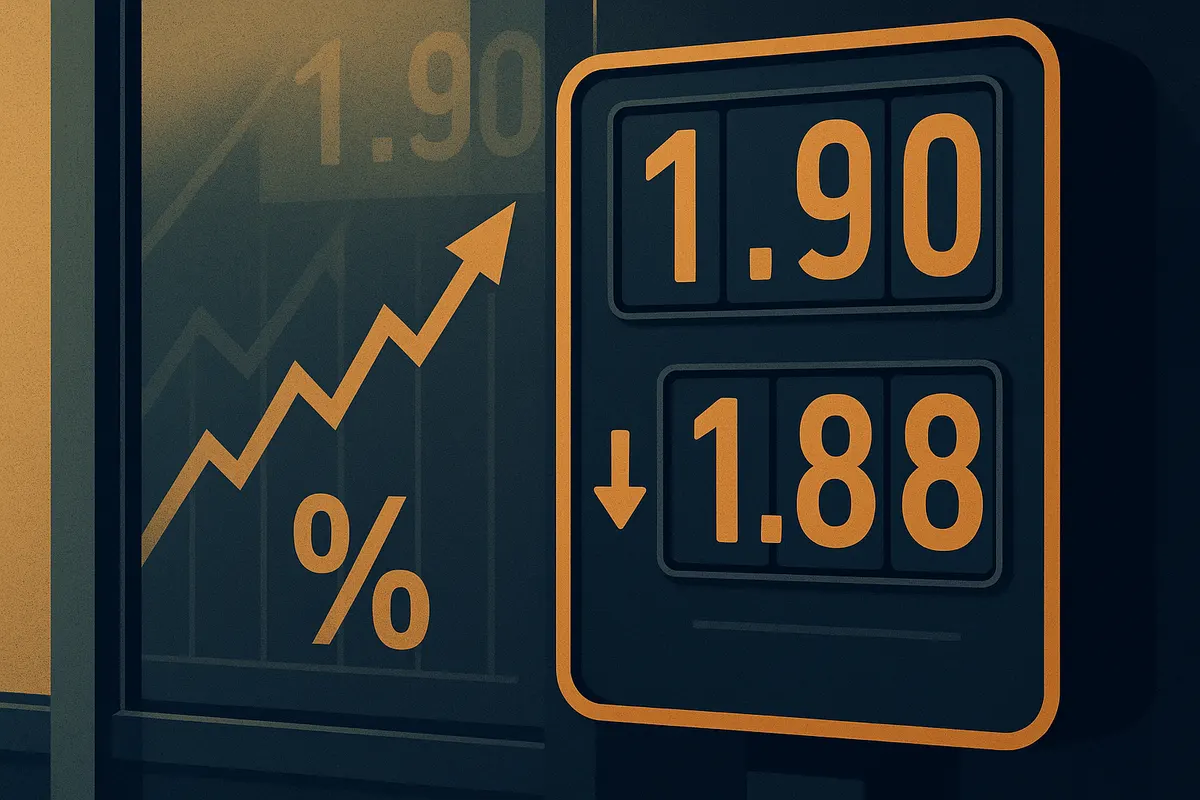
Raise the duty to 25% and the same £5 of yield leaves £3.75. To get back to £4.25, gross yield has to rise to £5.67, because £4.25 ÷ 0.75 = £5.67. That means the margin moves from 5.00% to roughly 5.67%. In odds terms, 1.90 becomes about 1.88.
Real examples of tax-driven odds changes
Two pence sounds like nothing. Work out what it does to your break-even point: at 1.90 you need to be right 52.63% of the time to stand still. At 1.88 you need 53.19%. That extra half a percentage point of required accuracy is, for anyone betting seriously, the difference between a viable approach and a slow bleed.
The same logic runs through online casino. Slot RTP is a supplier setting, and many popular titles ship in multiple configurations. Moving a game from a 96% build to a 94% build lifts the house edge from 4% to 6%, which is a 50% increase in the long-run cost of play, while the game looks identical on screen. Nobody announces it. You have to check the game info panel, which is why understanding how house edge is calculated is worth ten minutes of your time.
In practice, operators rarely reprice everything at once. Margin goes up where price sensitivity is lowest: accumulators, in-play markets, obscure leagues, and same-game parlays where the effective margin is already high and almost impossible for a customer to reverse-engineer. Headline prices on the Premier League match odds stay competitive because those are the prices people compare.
Promotions are the first thing to be cut
Margin changes are slow and hidden. Promotional budgets are fast and visible, which is why player value usually erodes there first.
Marketing spend is discretionary, so it is the easiest line to trim when duty rises. What that looks like from the customer side:
- Smaller welcome offers, or matched deposits capped at lower amounts
- Higher wagering requirements, for example a bonus moving from 20x to 35x, which multiplies the turnover you need to generate before withdrawal
- Lower maximum cashout limits on bonus winnings
- Minimum odds restrictions tightened, so qualifying bets have to carry more risk
- Fewer price boosts, fewer money-back specials, and loyalty rewards that require more play for the same return
A 100% deposit bonus at 35x wagering is a materially worse product than the same headline bonus at 20x, and most players read only the headline. If you want the honest way to judge an offer, calculate the total turnover the terms demand, then apply the game’s house edge to that figure. That is the expected cost of clearing it.
Why the gambling tax impact lands on players, not operators
The obvious question: why not just accept a thinner profit? Because of how the business is actually shaped.
Large listed operators run net margins in the single digits to low teens after duty, marketing, technology, payment processing and compliance. Compliance costs alone have risen steeply across regulated markets, from affordability checks to advertising restrictions to source-of-funds reviews. A duty increase of several percentage points on gross revenue can consume a meaningful slice of net profit outright.
Three forces then make pass-through close to inevitable. Shareholders price these companies on earnings, so absorbing a permanent cost increase means a permanent re-rating downwards, which management is paid to avoid. Competitors face the same tax in the same market, so everyone adjusts together and nobody is punished for moving first. And gambling demand is fairly insensitive to small price changes, because most customers cannot easily tell 1.90 from 1.88.
The exception is where price comparison is easy and switching costs are zero. Exchanges and low-margin sportsbooks that compete openly on price have less room to hide an increase, so they tend to raise commission instead. Either way, the customer pays.
What to do with this information
Nothing here is a strategy for beating a bookmaker, and no adjustment to your behaviour removes the built-in edge. Tax rises make that edge bigger, which is precisely the point. What you can do is notice when it happens.
- Compare prices across two or three licensed operators on the same market rather than relying on one. Margin differences of half a point are common and visible if you look.
- Check the RTP in a slot’s info panel before you play, not after. The same game name can carry different numbers.
- Read bonus terms for wagering multiple, game weighting and maximum cashout, then do the turnover math.
- Factor in taxes that hit you directly. In India, GST applies to the amount you deposit into play, and winnings are taxed with deduction at source, so your net return is lower than the posted odds suggest. Build that into any expectation you have about a session before you start. Our guide to reading betting odds and implied probability covers the calculation.
Gambling is entertainment with a negative expected return, and taxation moves that return further against you. Set deposit and loss limits before you play, keep stakes at a level you can comfortably lose, and use the cool-off or self-exclusion tools any licensed operator is required to offer. If it stops being entertainment, stop.
Frequently asked questions
How do gambling taxes affect odds?
Operators pay duty on gross gaming revenue, so when the rate rises they widen the margin built into prices to protect net profit. In a balanced two-way market, a duty increase from 15% to 25% of gross revenue is enough to move a 1.90 price to roughly 1.88, lifting your break-even win rate from 52.63% to 53.19%.
Why do bookmakers fight tax increases?
Because duty is charged on gross revenue rather than profit, so an increase hits earnings directly. They also argue that worse licensed prices push customers towards unlicensed sites, reduce funding for horseracing, and cost retail jobs.
What is betting duty?
Betting duty is a tax on a bookmaker’s gross gambling yield, calculated as stakes received minus winnings paid out. In the UK, sports betting carries General Betting Duty at 15%, while online casino games fall under Remote Gaming Duty at 21%.
How do taxes reduce player value?
Through three channels: wider margins on odds, lower RTP settings on casino games, and smaller promotions with tighter terms. Where tax is levied on players directly, as with GST on deposits and tax on winnings in India, the reduction in value is immediate and shows up in your net return rather than in the posted price.



Leave a Reply